We’ve all been there—feeling like the weight of the world is a bit too much to carry, wishing we had a guide who wouldn’t just disappear when things get tough.
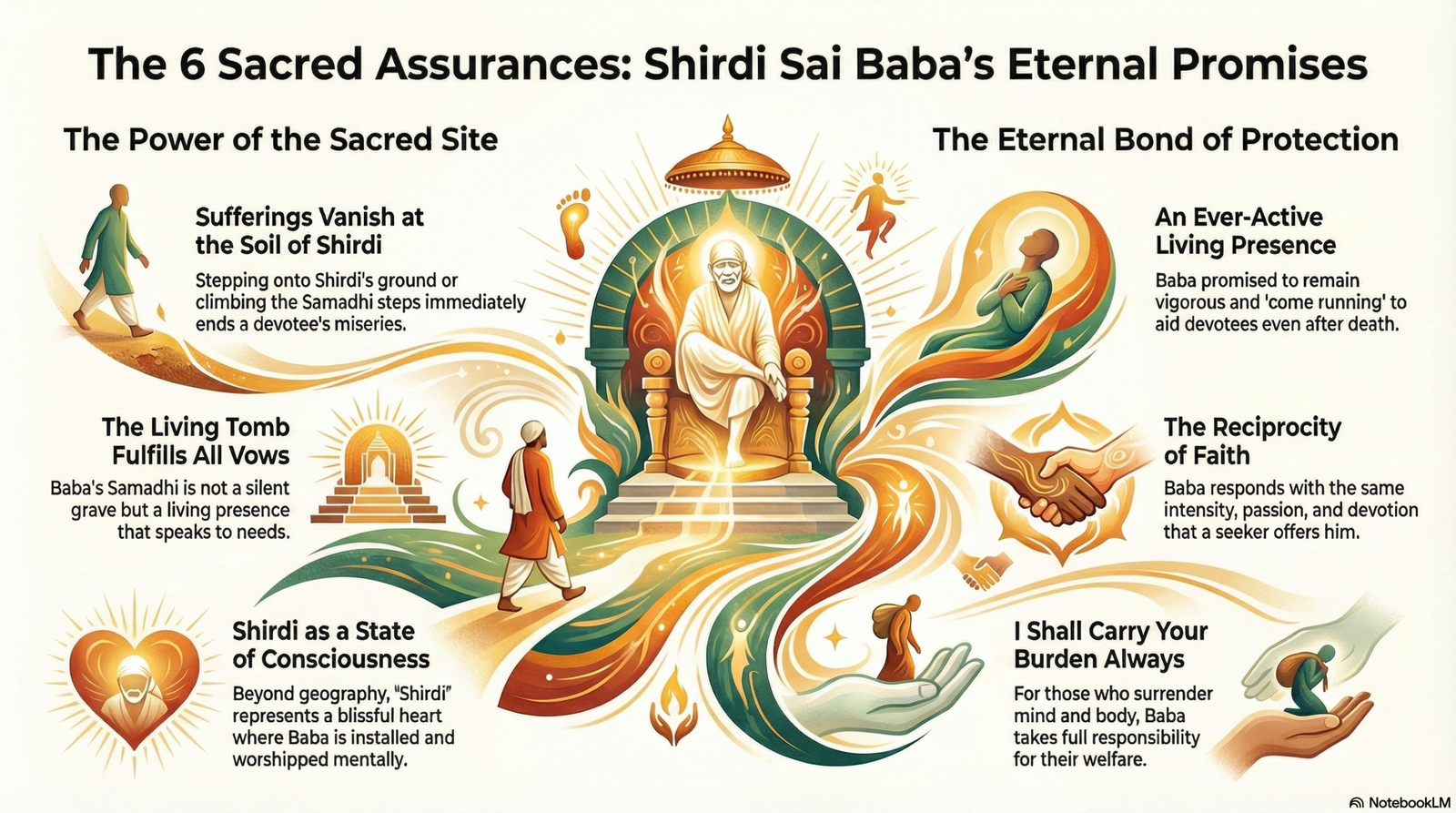
For many, Shirdi Sai Baba isn’t just a historical figure from the 1800s. He’s what people call a “living presence.” Even though he passed away in 1918, he left behind 11 “Assurances”—basically, 11 promises that he’s still on the job. These aren’t just dusty old sayings; they’re more like an open standing invitation to anyone looking for a little peace of mind in a chaotic world.
Here are five lessons from those promises that might change how you look at life, faith, and the “grind.”
1. Shirdi is a State of Mind, Not Just a Map
Most people think of Shirdi as a town in India you visit on a pilgrimage. But the first big lesson from Baba’s promises is that “Shirdi” is actually an internal destination.
Sure, thousands of people travel to the physical village every year, but Baba taught that there are actually two Shirdis: the one on the map and the one in your heart. Think of it as a spiritual GPS. The moment you turn your focus inward, you’ve “arrived.” You don’t need a plane ticket to find a sense of home; you just need to shift your perspective.
2. The “Grind” is Actually Good for You
In 1910, Baba did something really weird. A cholera epidemic was hitting his village, and he started grinding wheat in a hand-mill. People were confused—he wasn’t making flour for bread. It turned out he was symbolically “grinding” the disease out of the village.
There’s a deep lesson here for us today. We often feel like life is “grinding us down,” right? But in Baba’s world, that grinding is actually a process of refining us. It’s about breaking down the ego and the heavy “junk” we carry around. By staying close to the center—the “handle of knowledge”—we don’t get crushed by the world’s rotations; we get transformed into something better.
3. The Ultimate “Role Reversal”
In most religions, we’re told we owe everything to the Divine. But Baba flipped the script in a way that’s honestly kind of mind-blowing.
He promised that if someone gives him their heart and mind, he becomes indebted to them. Imagine that: the Divine acting like your servant because you’ve shown up with sincerity. He used to call himself a “slave of slaves.” It’s a radical reminder that spiritual power isn’t about being “above” anyone; it’s about being so humble that you’re willing to carry someone else’s burden.
4. A Guide Who Doesn’t Retire
One of the biggest fears people have is that once a teacher or a loved one dies, their help stops. Baba tackled this head-on. He promised, “Even though I have left my body, I will come running for my devotees.”
He basically said his tomb would be “active.” There are countless stories of him helping people long after 1918—like the time he (spiritually) saved a child from a fire miles away. The lesson for us? True guidance doesn’t have an expiration date. Just because you can’t see the help doesn’t mean it isn’t “running” toward you when you call.
5. Breaking Down the “Us vs. Them” Walls
Baba lived in a very divided time, yet he spent his life bridging the gap between different religions. He lived in a mosque but gave it a Hindu name (Dwarkamai). He’d say “Allah Malik” (God is King) while allowing people to perform Hindu rituals.
He taught that the walls we build—based on religion, status, or even health—are fake. He once let a man with leprosy massage his arm, proving that the spirit can’t be “dirty.” In a world that feels more divided than ever, his lesson is simple: the only thing that matters is the sincerity of your heart. Everything else is just noise.
The Bottom Line: Trust the Process
At the end of the day, Baba’s 11 promises boil down to two things: Shraddha (faith) and Saburi (patience).
They remind us that we don’t have to do everything ourselves. We don’t have to be the “CEO” of our own stress. If there’s a presence out there that’s active, vigilant, and ready to help, why are we still insisting on carrying the heavy bags?
Maybe it’s time to let them go. What’s the one burden you’re still refusing to drop?