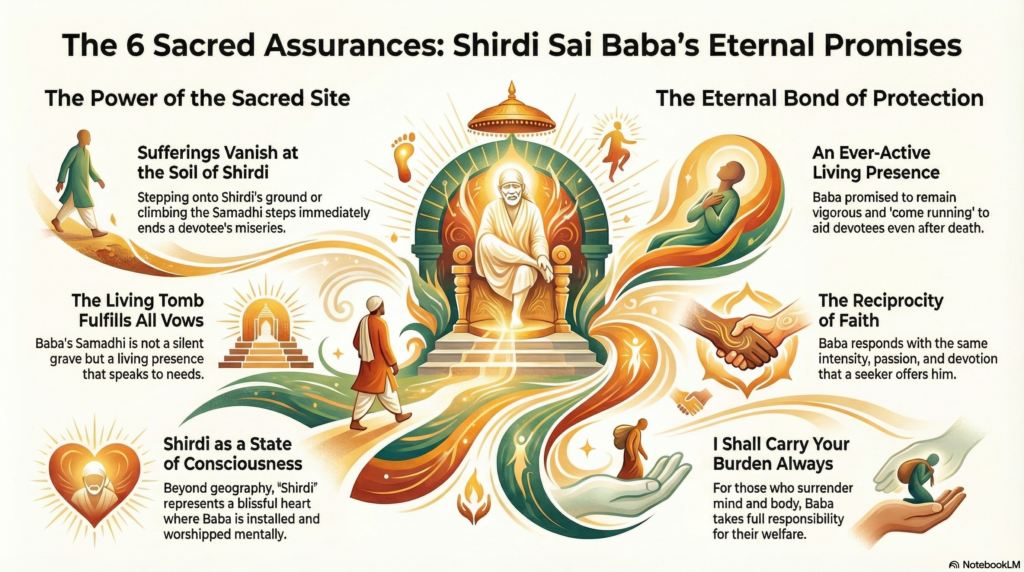

This is where the story of Sai Baba of Shirdi gets interesting. He wasn’t just some “mad fakir” wandering around a dusty Indian village in the 1800s. If you look past the old black-and-white photos, you find a man who spent his life breaking down the walls we build between ourselves. He was a master of contradictions, and honestly, his life reads like a manual for staying sane in a messy world.
Here are five lessons from Shirdi that still hit home today.
1. The “Grinding” of Our Problems
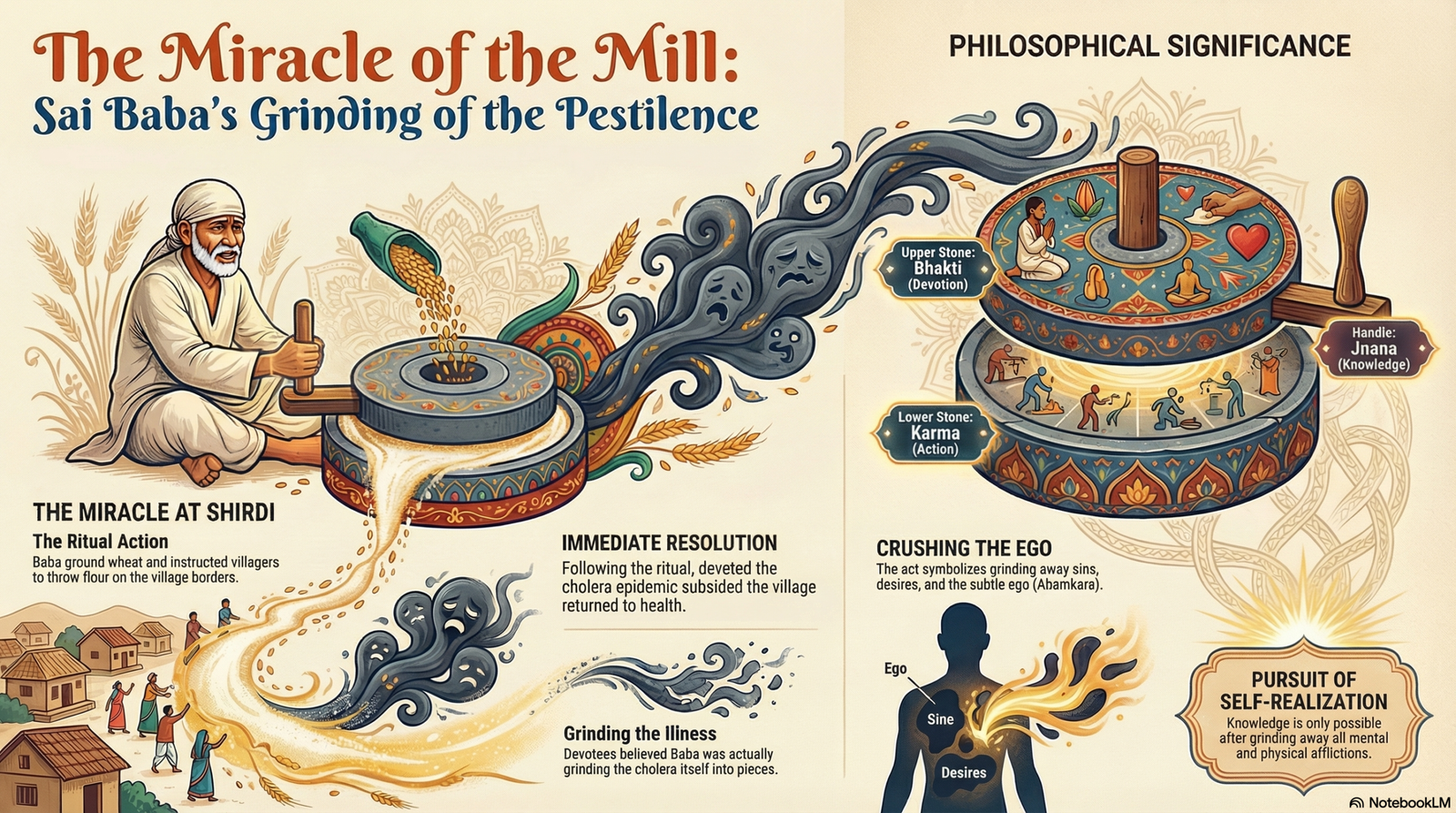
Back in 1910, a cholera epidemic hit Shirdi. People were terrified. Instead of giving a speech or hiding away, Sai Baba did something odd: he sat down at a stone hand-mill and started grinding wheat. Once he was done, he told the villagers to take the flour and scatter it at the village borders. Almost immediately, the plague started to fade.
On the surface, it looks like a miracle or a strange ritual. But there’s a deeper layer here. For Baba, the mill represented the way we process life. The bottom stone was our actions (Karma), the top was our devotion (Bhakti), and the handle was our wisdom (Jnana).
He was teaching us that if we want to grow, we have to “grind” our impulses, our ego, and our fears. Growth doesn’t just happen; it’s the result of taking the raw “grain” of our daily struggles and working through them until they become something useful—spiritual clarity.
2. Radical Unity (No Labels Required)
We live in a world that loves to put people in boxes. Sai Baba absolutely refused to stay in one. He lived in a mosque, but he gave it a Hindu name: Dwarkamai. He constantly used Muslim phrases like “Allah Malik” (God is the Lord), yet he knew the Hindu scriptures inside and out.
He was a “people person” in the truest sense. He didn’t care if you were a high-ranking priest or someone society had cast aside; he treated everyone the same. In a time when religious tension was high, he showed that the Divine doesn’t care about the label on the bottle—it cares about what’s inside. It’s a pretty timely reminder for us to stop looking at labels and start looking at hearts.
3. Why Simplicity Beats a Full Bank Account
One of the weirdest things about Sai Baba was his relationship with money. By the time he was famous, wealthy merchants were handing him thousands of rupees every day. But here’s the kicker: he gave every single cent away to the poor before the sun went down. He died with almost nothing to his name.
He practiced extreme discipline to show that he wasn’t a slave to his body or his bank account. He famously said that being a mendicant (someone who lives on nothing) was “real lordship” because it lasts forever, while the power that comes with riches is gone in a flash. It’s a gut-punch of a lesson for our “more is more” culture.
4. Finding God in the Grocery Store
There’s a great story about a woman named Mrs. Tarkhad. She gave a piece of bread to a stray, hungry dog one afternoon. Later that day, Baba told her he felt “sumptuously fed” by her. She was confused—she hadn’t fed him, she’d fed a dog.
Baba’s point was simple: he is in everything.
This flips the script on what it means to be “spiritual.” It’s not just about what you do on a meditation cushion or in a church. It’s about how you treat the cat on the street, the waiter at lunch, or the annoying person in traffic. If you can see a spark of the Divine in a stray dog, you’ll start seeing it everywhere.
5. The “Guide” in the Jungle
Baba once compared life to a trek through a thick jungle. It’s full of “tigers and wolves”—the internal traps of our own egos and the external disasters we can’t control.
His advice? Don’t try to do it alone. You need a guide. But he didn’t ask for a fee in cash. He asked for two things: Shraddha and Saburi.
- Shraddha is faith—trusting that you’re on the right path.
- Saburi is patience—the ability to wait without losing your cool.
In a world of instant gratification and 24-hour news cycles, the idea of Saburi is radical. It’s a call to slow down, breathe, and trust the timing of your life.
A Little Perspective for the Week
Sai Baba’s life isn’t just a history lesson; it’s a challenge. It asks us to look at our own obstacles not as “bad luck,” but as grain that needs to be ground down.
As you go through your week, maybe think about that hand-mill in Shirdi. What parts of your ego or your pride are getting in your way? How can you “grind” those fears into something that actually helps you grow? Sometimes, the only way to get to the “flour” of a better life is to have the courage to face the stones.